Jet charters Minneapolis
We arrange jet charters Minneapolis travelers can compare line by line. A light jet from Minneapolis to Chicago runs about $4,000 to $6,000 each way. You tell us the trip and we price the aircraft that fit it.
- 24priced routes
- 4airports
- $2,200lowest hourly estimate
- 2h 25mNew York to Minneapolis, light jet
Estimate your trip
Choose a route, passenger count and bags to see the right class, the flight time and a price range.
- Calls answered 24/7 by charter agents
- Flights by FAA Part 135 operators only
- One all-in quote before you commit


Routes people book from Minneapolis
Popular city pairs are short enough that a light jet covers them in a single hop, and Chicago to Minneapolis is 299 nautical miles in about 1 hour 2 minutes for $4,000 to $6,000. New York sits at 869 nautical miles and roughly $9,000 to $14,000, and Los Angeles at 1,333 nautical miles for $16,500 to $25,000.
Winter travelers push the other direction. Minneapolis to Las Vegas is 1,135 nautical miles and $14,500 to $22,000, Aspen is 703 nautical miles and $7,500 to $11,500. International legs to Nassau and Cabo San Lucas clear CBP on return, and Turks and Caicos at 1,727 nautical miles needs a super-midsize or better. Other common requests include Dallas, Denver, Phoenix and Seattle.
- New York → Minneapolis2h 25m
- Los Angeles → Minneapolis4h 18m
- Chicago → Minneapolis1h 02m
- Dallas → Minneapolis2h 07m
- Houston → Minneapolis2h 33m
- Atlanta → Minneapolis2h 12m
- Washington, DC → Minneapolis2h 13m
- Boston → Minneapolis2h 38m
- Philadelphia → Minneapolis2h 22m
- Denver → Minneapolis1h 48m
- Phoenix → Minneapolis3h 00m
- San Francisco → Minneapolis4h 26m
- Seattle → Minneapolis4h 01m
- Las Vegas → Minneapolis3h 49m
- Nashville → Minneapolis1h 46m
- Charlotte → Minneapolis2h 16m
- Minneapolis → Las Vegas3h 49m
- Minneapolis → Chicago1h 02m
- Minneapolis → New York2h 25m
- Minneapolis → Los Angeles4h 18m
- Minneapolis → Aspen2h 01m
- Minneapolis → Nassau4h 30m
- Minneapolis → Cabo San Lucas4h 49m
- Minneapolis → Turks and Caicos5h 16m

Aircraft classes for Twin Cities trips
The right class depends on distance, passenger count and runway length, and a turboprop covers a short Minnesota hop at 300 knots just as well as a jet covers 1,300 miles. Turboprops and light jets handle most regional flights from Minneapolis at 430 knots or slower, while heavy jets hold 4,000 nautical miles for the longer overwater and transcontinental legs.
We do not own aircraft. We place your trip with FAA Part 135 operators who hold operational control, and we act as your agent under DOT Part 295. That means the certificate holder flies the aircraft and answers for the crew, the maintenance and the dispatch, and you get a quote that names the operator before you commit.

Turboprop
- 6-8 seats
- 300 kt cruise
- 1,500 nm range
Pilatus PC-12 NGX, Daher TBM 960

Light jet
- 4-7 seats
- 430 kt cruise
- 1,400 nm range
Cessna Citation CJ4 Gen2, Embraer Phenom 300E
Midsize jet
- 7-9 seats
- 440 kt cruise
- 2,100 nm range
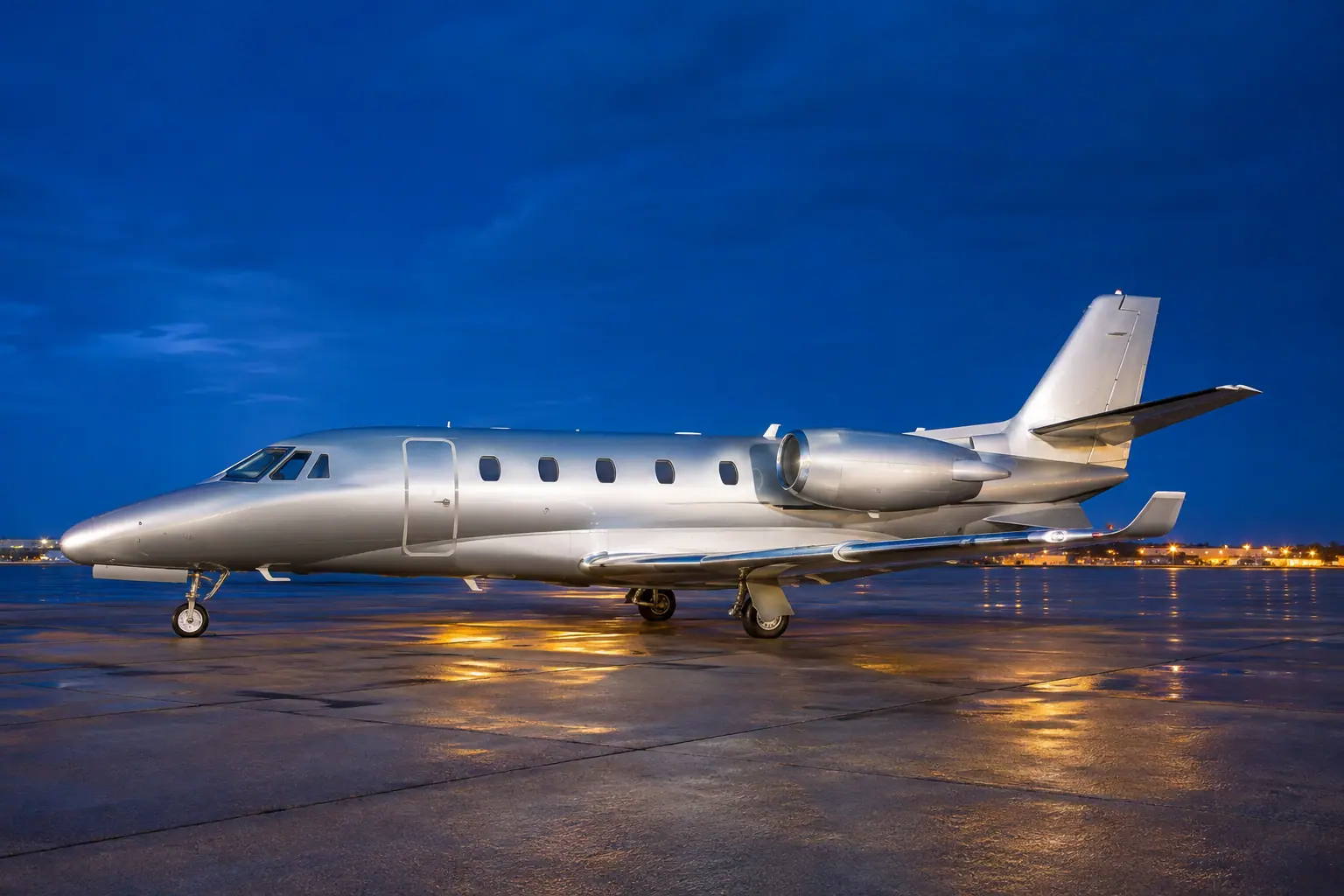
Cessna Citation XLS+, Cessna Citation Latitude

Super-midsize jet
- 8-10 seats
- 470 kt cruise
- 3,200 nm range
Cessna Citation X+, Bombardier Challenger 350
Heavy jet
- 10-14 seats
- 470 kt cruise
- 4,000 nm range
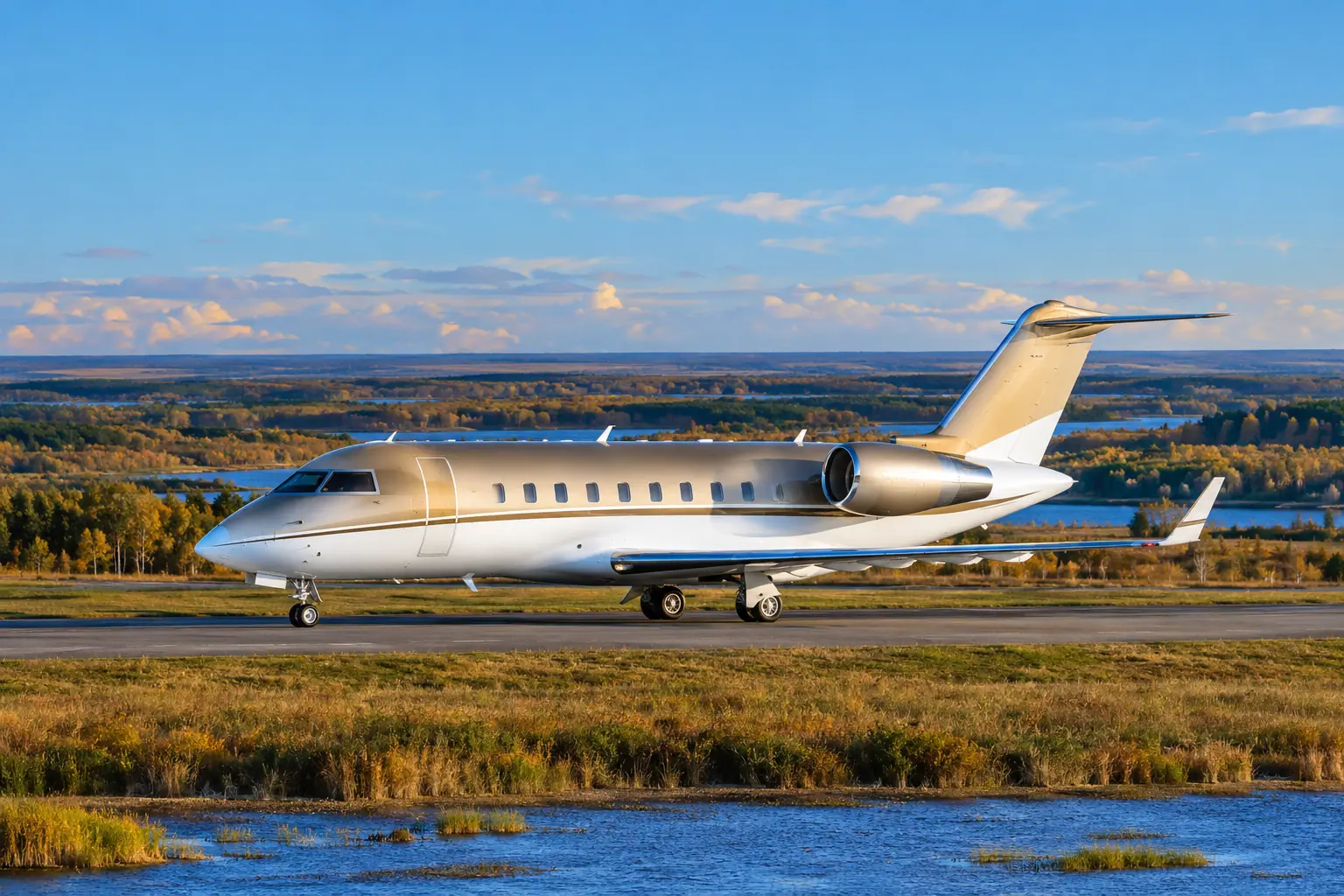
Dassault Falcon 900LX, Gulfstream G450
Minneapolis jet charters airports
Four fields serve the metro, and the choice comes down to where you live, how long the runway needs to be and whether the FBO is open when you land. Flying Cloud and Holman Field keep your drive short, while MSP carries the longest runway at 11,006 feet for heavy jets and long international departures.

Saint Paul Downtown Holman Field
- KSTP code
- 6,491 ft runway
- 10 mi to Downtown Minneapolis
Saint Paul Downtown Holman Field sits at 705 feet elevation with a 6,491-foot runway and Signature Aviation on the field. It is the closest option for travelers starting on the Saint Paul side, and the short runway suits light and midsize aircraft. On a 115F afternoon, density altitude reaches about 3,000 feet, which crews plan for on departure.

Minneapolis–Saint Paul International Airport / Wold–Chamberlain Field
- KMSP code
- 11,006 ft runway
- 7 mi to Downtown Minneapolis
Minneapolis–Saint Paul International is the metro's airline field, at 841 feet elevation with an 11,006-foot runway. It handles heavy jets and international departures that need the length, and the terminal side is busy. For international returns, CBP processing happens here. July density altitude runs about 2,600 feet, so hot-day performance is rarely a limit for large aircraft.
Anoka County-Blaine (Janes Field) Airport
- KANE code
- 5,000 ft runway
- 12 mi to Downtown Minneapolis
Anoka County-Blaine sits north of the metro at 912 feet elevation with a 5,000-foot runway and Atlantic Aviation as the FBO. It draws travelers from the northern suburbs and serves turboprops, light jets and midsize aircraft comfortably. Summer density altitude tops out near 3,300 feet at 115F, worth knowing for a loaded departure.

Flying Cloud Airport
- KFCM code
- 5,001 ft runway
- 14 mi to Downtown Minneapolis
Flying Cloud Airport in Eden Prairie is the southwest metro option, at 906 feet elevation with a 5,001-foot runway and Thunderbird Aviation on site. It suits light and midsize jets and short regional hops, with a drive that beats the airline terminal for many western suburbs. July density altitude lands around 2,700 feet.
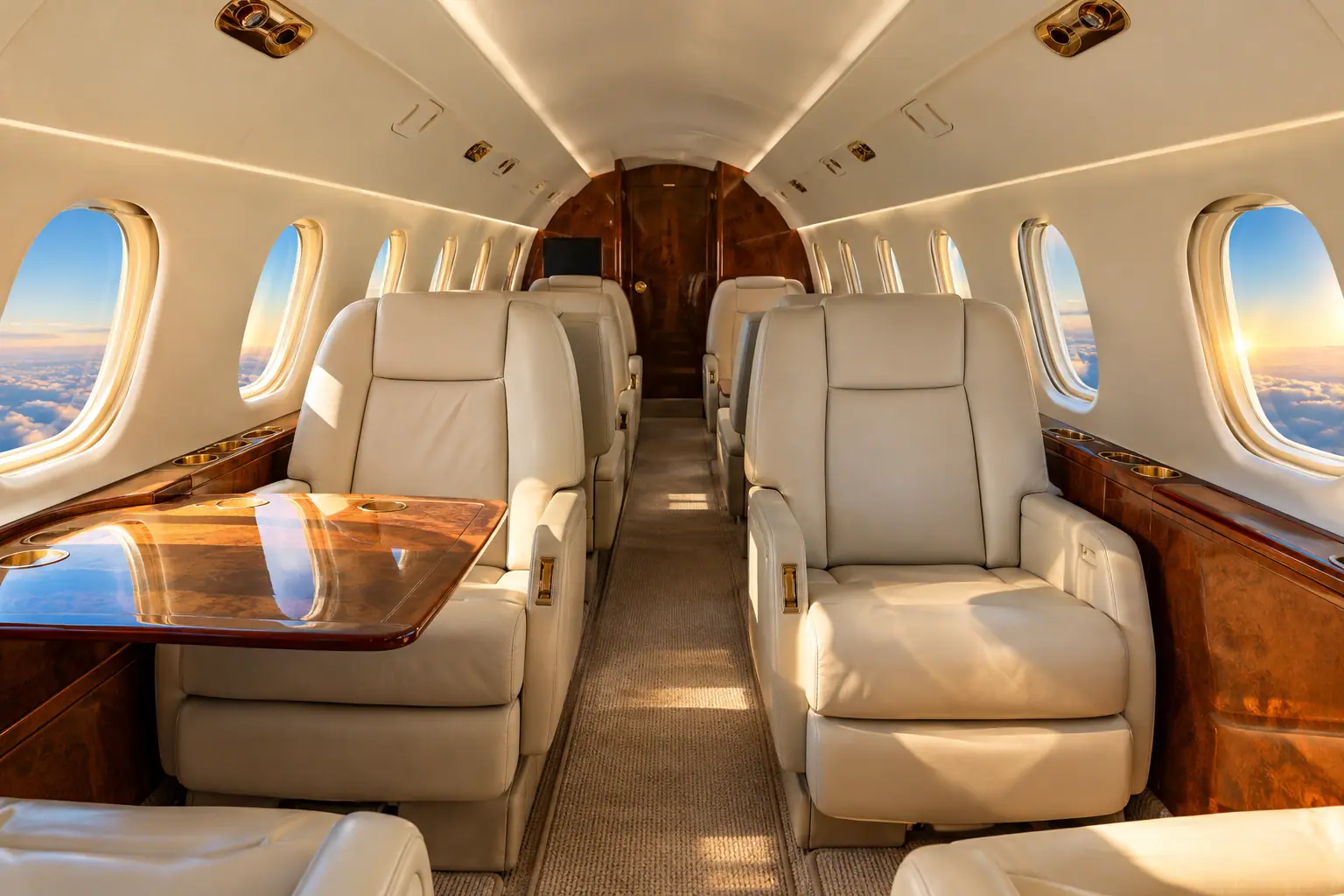
What jet charters in Minneapolis cost
Jet charters Minneapolis pricing starts with the aircraft class and the hours flown, not with a flat rate. Light jet rates of $3,800 to $5,800 an hour set the floor for most Twin Cities trips, and a turboprop runs $2,200 to $3,500 an hour when the trip is short and the runway is tight. Every figure we quote is an estimate built from live operator availability, so the number you see is the number you can book against.
Class drives the rest. A midsize jet runs $5,200 to $7,800 an hour with 7 to 9 seats and a typical range of 2,100 nautical miles. Super-midsize climbs to $7,200 to $10,000 an hour and 3,200 nautical miles, heavy jets run $9,500 to $14,500 an hour with 10 to 14 seats. When a one-way trip ends where the aircraft is not needed, an empty leg can cut the price; ask and we will look.
| Class | Seats | Est. hourly | New York → Minneapolis |
|---|---|---|---|
| Turboprop | 6-8 | $2,200–$3,500 | $7,500–$11,500 |
| Light jet | 4-7 | $3,800–$5,800 | $9,000–$14,000 |
| Midsize jet | 7-9 | $5,200–$7,800 | $12,500–$18,500 |
| Super-midsize jet | 8-10 | $7,200–$10,000 | $16,000–$22,500 |
| Heavy jet | 10-14 | $9,500–$14,500 | $21,500–$32,500 |

Jet charter demand peaks
Demand clusters around a few dates. The State Fair ends the summer, the Renaissance Festival runs weekends in August and September, and the Twin Cities Marathon fills an October weekend. Add the winter school breaks and the holidays, and the busiest weeks for a private flight from Minneapolis are the ones you would guess.
Booking early matters in those windows. Aircraft that base in the metro get pulled toward Florida and the Caribbean in February and toward the mountain towns in ski season, so a one-way trip can price better than a round trip if the aircraft needs to reposition anyway. Ask about empty legs from Minneapolis when your dates are flexible, since a repositioning flight can cost less than a scheduled one.
Minneapolis density altitude
Summer heat matters more than elevation here, because the fields sit between 705 and 912 feet and the air thins anyway. July highs of 83F push density altitude to about 2,500 feet at Holman Field and 2,700 at Flying Cloud, and a 115F afternoon reaches 3,000 to 3,300 feet. That costs a lightly loaded jet some runway and climb performance, and it is why a midday departure in a small aircraft sometimes carries less fuel than the same trip in October.
Winter is the other half of the year. January highs average 25F and density altitude drops to about minus 1,400 feet, which helps performance and does nothing for the taxiway. Ice, snow and deicing delays are the real constraint from December into March, so build slack into a winter itinerary. April through June brings 11 to 12 wet days a month at Minneapolis, and thunderstorms can reroute a flight with little notice.
| Month | Avg high | Wet days | KSTP DA | KMSP DA | KANE DA |
|---|---|---|---|---|---|
| Jan | 25°F | 5 | -1,400 ft | -1,200 ft | -1,100 ft |
| Feb | 28°F | 6 | -1,200 ft | -1,000 ft | -900 ft |
| Mar | 43°F | 7 | -200 ft | 0 ft | 100 ft |
| Apr | 54°F | 11 | 500 ft | 700 ft | 800 ft |
| May | 69°F | 12 | 1,500 ft | 1,700 ft | 1,800 ft |
| Jun | 80°F | 11 | 2,300 ft | 2,400 ft | 2,500 ft |
| Jul | 83°F | 9 | 2,500 ft | 2,600 ft | 2,700 ft |
| Aug | 80°F | 11 | 2,300 ft | 2,400 ft | 2,500 ft |
| Sep | 74°F | 10 | 1,900 ft | 2,000 ft | 2,100 ft |
| Oct | 58°F | 9 | 800 ft | 1,000 ft | 1,100 ft |
| Nov | 43°F | 8 | -200 ft | 0 ft | 100 ft |
| Dec | 30°F | 8 | -1,100 ft | -900 ft | -800 ft |
Rain days: days with 1 mm of precipitation or more. Density altitude based on the mean afternoon high, rule-of-thumb formula. Operators use their own performance data.
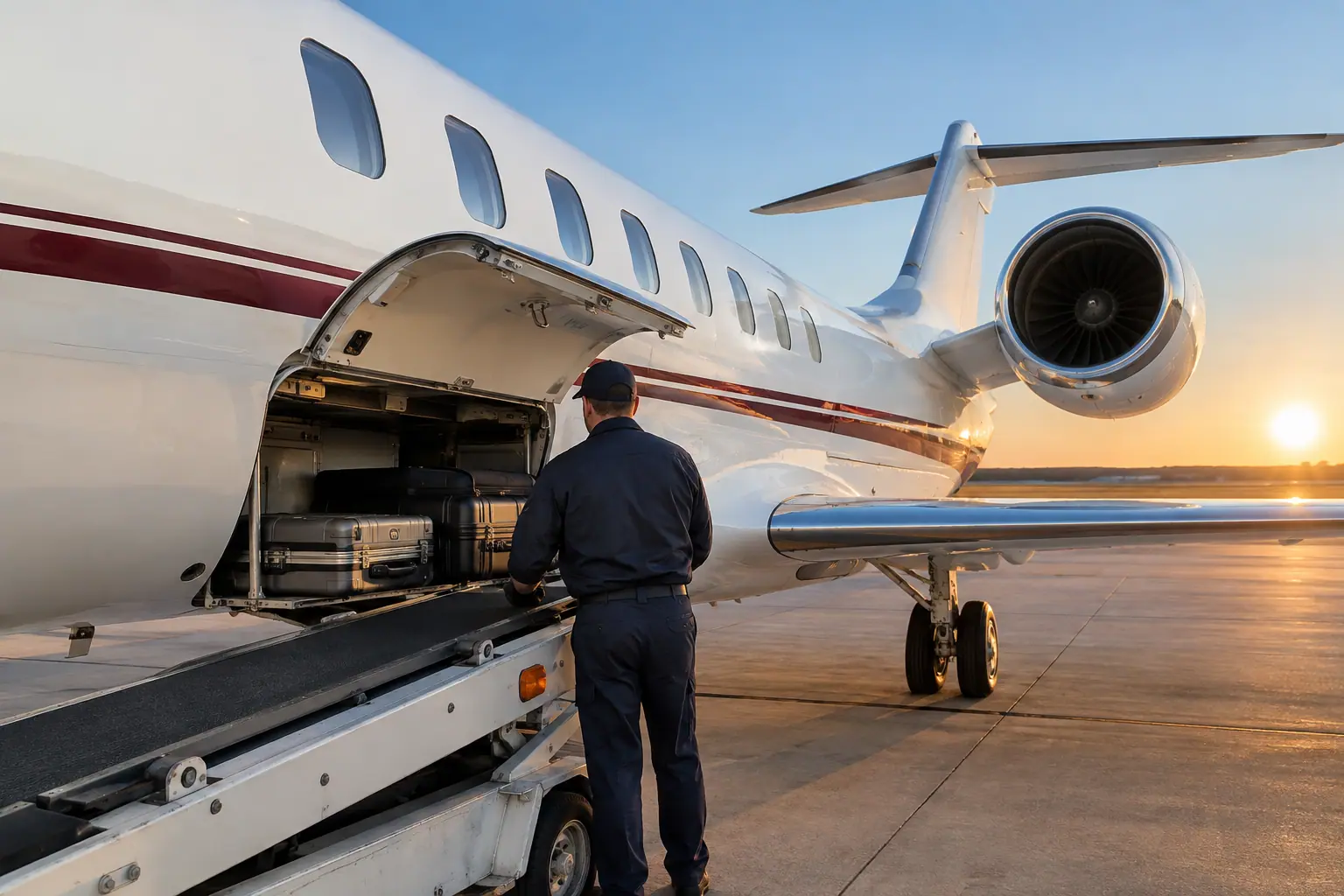
How we put a charter together
Tell us the trip
Give us the cities, the dates, the passenger count and any bags or gear. We need to know whether the return is same-day, because that changes which aircraft make sense.
We match aircraft and operator
We check availability with FAA Part 135 operators who fit the route and the runway. You see the class, the operator and the estimate before anything is held.
You review the quote
The estimate names the aircraft, the operator and the price range. Ask what is included in the hourly figure and what is billed separately, such as crew overnight or deicing.
We confirm and brief you
Once you approve, the operator confirms the trip and we send the FBO, the arrival time and the documents you need. For international legs, CBP paperwork gets handled early.
Common questions
What do jet charters Minneapolis typically cost?
Light jet rates run $3,800 to $5,800 an hour, so Chicago is about $4,000 to $6,000 and New York about $9,000 to $14,000 each way. Midsize jets run $5,200 to $7,800 an hour and heavy jets $9,500 to $14,500. These are estimates, and the final price depends on aircraft availability and how the trip is flown.
Which airport near Minneapolis do private jets use?
Four fields serve the metro: Holman Field at 705 feet with a 6,491-foot runway, Flying Cloud at 906 feet with 5,001 feet, Anoka County-Blaine at 912 feet with 5,000 feet, and MSP at 841 feet with 11,006 feet. Light jets usually prefer the smaller fields, and heavy jets need MSP for the runway.
How long is a private flight from Minneapolis to New York?
About 2 hours 25 minutes in a light jet over 869 nautical miles. The estimate runs $9,000 to $14,000 each way. A turboprop would take longer and cannot make the trip without a stop, so a light jet or larger is the practical choice for that route.
Can I book a one-way private jet from Minneapolis?
Yes. One-way trips price on the hours flown plus any repositioning the operator has to absorb. If the aircraft already needs to move, an empty leg can cost less than a round trip. Give us flexible dates and we will check what is repositioning out of the metro.
Who is responsible for the flight itself?
The operator is. Flights are flown by FAA Part 135 operators who hold operational control and answer for crew, maintenance and dispatch. We arrange the trip as your agent under DOT Part 295, which is why every quote names the operator before you commit.
Does summer heat affect departures from Minneapolis?
It can. July highs of 83F put density altitude near 2,500 feet at Holman Field and about 2,700 at Flying Cloud, and a 115F afternoon reaches 3,000 to 3,300 feet. Small aircraft may carry less fuel or wait for a cooler hour, so plan hot-day departures with that in mind.