Jet charter airports Minneapolis
Minneapolis flyers have four practical airports for private flights. The closest field to downtown is 1,285 miles from our strip benchmarks. We arrange charter through operators who hold FAA Part 135 authority.
- Home
- Airports

The Twin Cities sit under one of the busiest airspace shelves in the country, and the airport you pick changes the drive, the ramp, and the aircraft that can use the runway. Four fields matter for jet charter airports Minneapolis comparisons: Minneapolis–Saint Paul International, Saint Paul Downtown Holman Field, Flying Cloud in Eden Prairie, and Anoka County-Blaine. None of them is a single answer. A heavy jet bound for Europe needs MSP's 11,006-foot runway. A light jet headed to Chicago does fine off Flying Cloud's 5,001 feet.
The tradeoff is usually ground time against runway length. Holman Field sits close to downtown Saint Paul, while MSP carries the airline traffic and the longest pavement. Flying Cloud and Anoka County serve the western and northern suburbs with smaller footprints. Summer density altitude climbs to about 2,500 to 2,700 feet at the relief fields, which matters for a fully loaded departure on a hot afternoon. Below, the numbers to compare, then how to book.
A light jet from Minneapolis to Chicago runs $4,000 to $6,000 on a 299-nautical-mile route. The same class of aircraft covers New York in 2h 25m for $9,000 to $14,000. Those are estimates, and they move with aircraft, date, and one-way or round-trip demand.
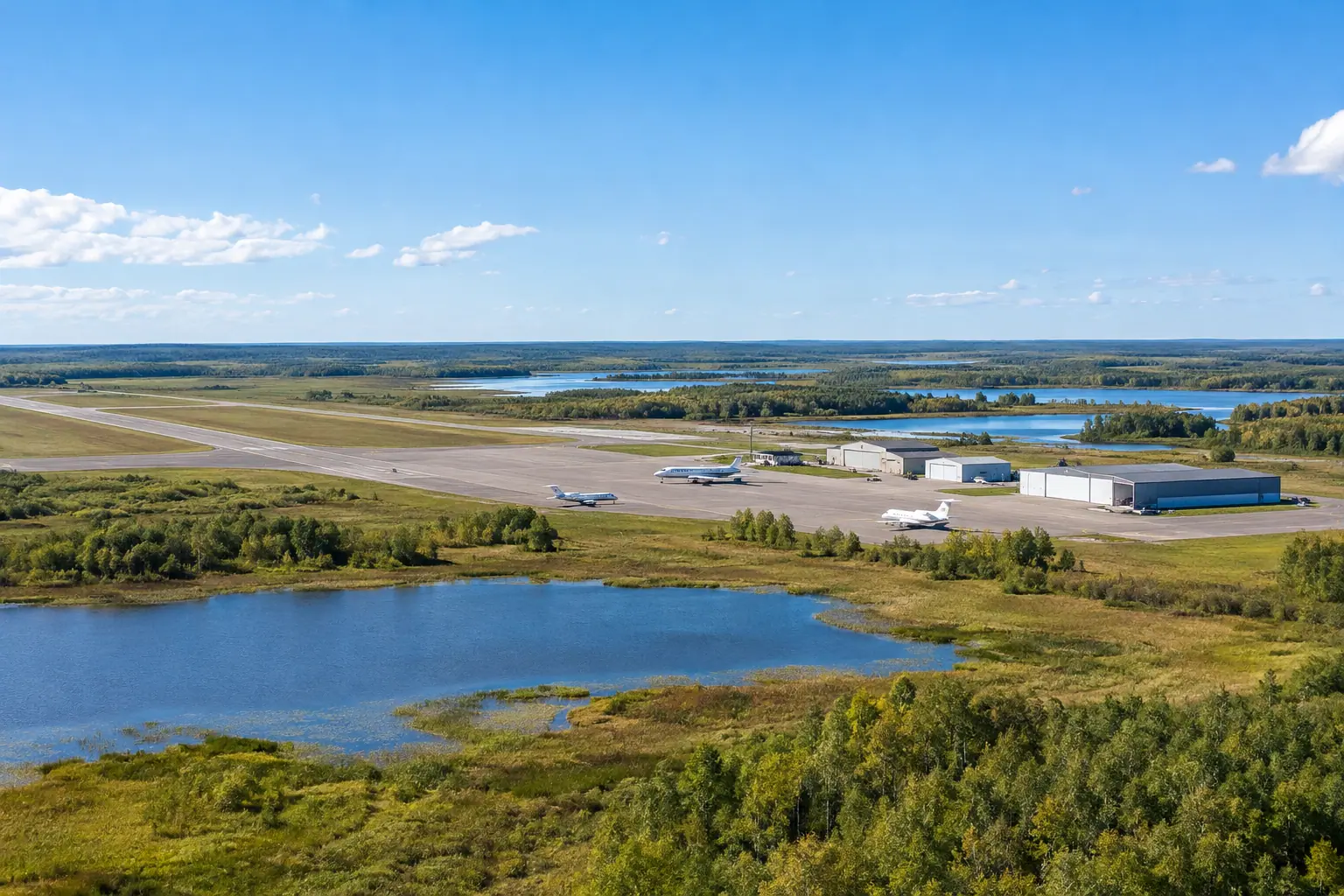
Saint Paul Downtown Holman Field
- KSTP code
- 705 ft elevation
3 strips, longest 6,491 ft. 10 mi from Downtown Minneapolis. FBO: Signature Aviation.

Minneapolis–Saint Paul International Airport / Wold–Chamberlain Field
- KMSP code
- 841 ft elevation
4 strips, longest 11,006 ft. 7 mi from Downtown Minneapolis.

Anoka County-Blaine (Janes Field) Airport
- KANE code
- 912 ft elevation
2 strips, longest 5,000 ft. 12 mi from Downtown Minneapolis. FBO: Atlantic Aviation.

Flying Cloud Airport
- KFCM code
- 906 ft elevation
2 strips, longest 5,001 ft. 14 mi from Downtown Minneapolis. FBO: Thunderbird Aviation.
Compare jet charter airports Minneapolis
Runway length is the first filter for jet charter airports Minneapolis travelers weigh, and MSP leads with 11,006 feet at 841 feet elevation. Holman Field offers 6,491 feet at 705 feet, Anoka County 5,000 feet at 912 feet, and Flying Cloud 5,001 feet at 906 feet. At 841 feet elevation, MSP's 11,006-foot runway opens heavy jet routes that relief fields cannot serve without a fuel stop. If your trip is Minneapolis to Cabo San Lucas at 1,541 nautical miles, then a super-midsize or heavy jet off MSP is the simpler planning case. For shorter legs, the smaller fields save drive time and ramp congestion. Flying Cloud, at 5,001 feet, handles light and midsize jets on most Chicago and Nashville routes at 299 and 603 nautical miles respectively. Holman Field is the closest option for a downtown Saint Paul departure. Anoka County draws the northern suburbs and sits at the highest elevation of the four, so density altitude deserves a look on warm days. If a client is flying to Aspen at 703 nautical miles, then a light jet at $7,500 to $11,500 works from any of them. Jet charter airports Minneapolis flyers choose also differ in on-site services, and only some have an FBO: Signature Aviation at Holman Field, Thunderbird Aviation at Flying Cloud, Atlantic Aviation at Anoka County. MSP's passenger terminals handle charter arrivals and departures through the FBOs serving the field. Ask which fixed-base operator your operator uses before you set the meeting point. If your itinerary includes an international leg, then CBP clearance needs to be confirmed at the specific airport on the specific date.
| Airport | Elevation | Longest runway | To Downtown Minneapolis | July density altitude |
|---|---|---|---|---|
| Saint Paul Downtown Holman Field | 705 ft | 6,491 ft | 10 mi | 2,500 ft |
| Minneapolis–Saint Paul International Airport / Wold–Chamberlain Field | 841 ft | 11,006 ft | 7 mi | 2,600 ft |
| Anoka County-Blaine (Janes Field) Airport | 912 ft | 5,000 ft | 12 mi | 2,700 ft |
| Flying Cloud Airport | 906 ft | 5,001 ft | 14 mi | 2,700 ft |
Heat, density altitude, and when to book
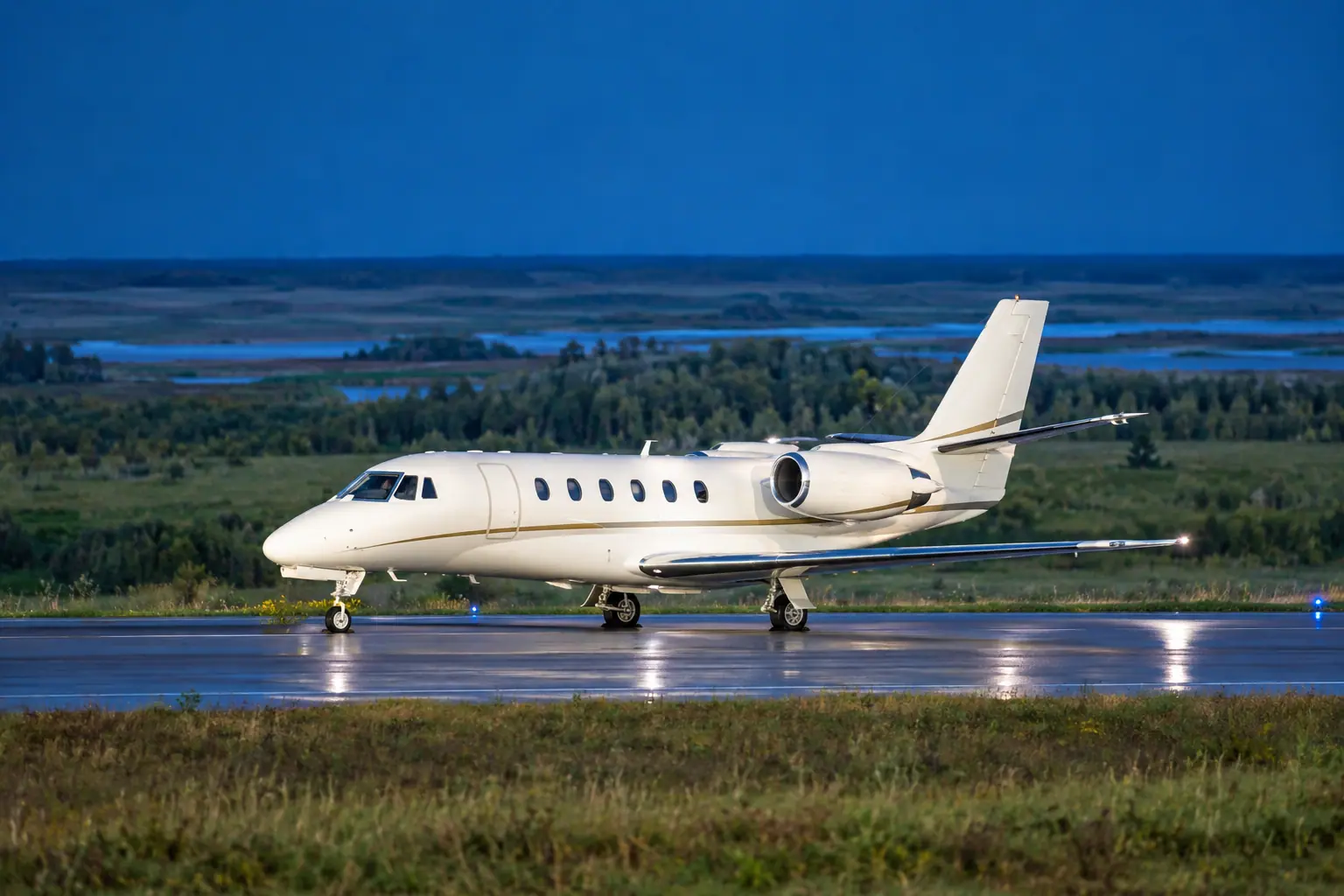
July is the benchmark month, with a high near 83F and density altitude around 2,500 feet at the relief fields. In July, Holman Field sees density altitude near 2,500 feet while MSP runs about 2,600 feet, and the relief-field figure rises toward 3,000 to 3,300 feet at the 115F peak. That costs performance on a full-fuel departure. If you are leaving on a hot afternoon with a full cabin, then a longer runway or a larger aircraft is the practical answer.
Winter runs the other direction. January density altitude sits near minus 1,400 feet, so aircraft perform well, but deicing and runway treatment add ground time. A January high near 25F means deicing before departure, so allow extra ramp time on early flights out of any of the four fields. Spring and fall are the easiest months for scheduling. For holiday weekends and the July peak, book early; aircraft availability tightens and estimates climb.
Flying Cloud and Anoka County sit at 906 and 912 feet elevation, which lifts density altitude in summer compared with Holman Field's 705 feet. That is a real operational difference on a light jet with six passengers and bags. If your departure is at midday in July, then compare the density altitude at your chosen field against the aircraft's performance chart.
Questions
Which jet charter airports Minneapolis passengers use most?
The four practical fields are Minneapolis–Saint Paul International (MSP), Saint Paul Downtown Holman Field (STP), Flying Cloud (FCM), and Anoka County-Blaine (KANE). MSP has the longest runway at 11,006 feet. Holman Field is closest to downtown Saint Paul. Flying Cloud serves Eden Prairie and the west metro. Anoka County serves the north metro. The right field depends on aircraft size and where you start.
How much does a light jet from Minneapolis to Chicago cost?
Budget $4,000 to $6,000 for a light jet on the 299-nautical-mile route, which flies in about 1h 02m. That is an estimate and varies with aircraft, date, and whether the trip is one-way. The same route from Chicago to Minneapolis prices the same. Turboprops can be less on short legs but carry fewer passengers, typically 6 to 8.
Can heavy jets use the smaller Minneapolis-area airports?
Runway length limits them. Flying Cloud has 5,001 feet, Anoka County 5,000 feet, and Holman Field 6,491 feet, all at elevations of 705 to 912 feet. A heavy jet carrying 10 to 14 passengers on a long leg generally needs MSP's 11,006 feet. For Minneapolis to Turks and Caicos at 1,727 nautical miles, plan on MSP and a super-midsize or heavy aircraft.
What is density altitude, and why does it matter in Minneapolis?
Density altitude is the altitude the aircraft's wing and engine feel on a given day. In July, the relief fields run about 2,500 feet and climb toward 3,000 to 3,300 feet at the 115F peak. Higher density altitude reduces climb performance and payload. In January it falls near minus 1,400 feet, so aircraft perform better but deicing adds ground time.
Who operates the flights booked through a charter broker?
The flights are operated by FAA Part 135 operators who hold operational control and the certificate for the aircraft. A broker arranges the trip under DOT Part 295 as an agent and does not own or operate aircraft. Ask for the operator's name and certificate before you book. For international legs, confirm CBP clearance and document requirements with the operator.
How far in advance should I book a private flight from Minneapolis?
For July and holiday weekends, book early: that is the peak density-altitude month and aircraft availability tightens. For a light jet on a 299-nautical-mile route to Chicago, a few days is often enough outside peak periods. For heavy jets on long international routes, allow more lead time. Prices quoted are estimates, so compare at least two options before you commit.